The European Union's Ecodesign for Sustainable Products Regulation (ESPR) enters its active enforcement phase in 2026, transforming Digital Product Passports (DPP) from a voluntary sustainability initiative into a mandatory requirement for market access. Products sold in EU markets will need comprehensive digital documentation covering material composition, manufacturing origins, energy consumption, repair instructions, and end-of-life guidance.
The regulation affects virtually all physical products except food, feed, and medicines. The first product categories facing DPP requirements include textiles, electronics, batteries, and construction materials, with additional sectors following in subsequent phases.
Unlike previous compliance requirements that allowed paper-based documentation, ESPR mandates accessible digital formats. Products must carry unique identifiers—typically QR codes or radio-frequency identification (RFID) tags—linking to cloud-based information systems. The timeline is non-negotiable. Products without a compliant DPP will face market access denial across all EU member states.
Organizations that delay or ignore ESPR DPP requirements face severe consequences. Market access denial means products cannot be sold across the entire EU, immediately eliminating a major revenue source. Supply chain disruptions compound these losses as retailers and distributors increasingly require DPP compliance from suppliers before accepting products.
Competitive disadvantages emerge quickly. Early adopters gain operational experience, refine processes, and market their compliance as evidence of sustainability commitment. Late adopters face rushed implementations, higher costs, and perception as industry laggards.
Operational inefficiencies persist when organizations attempt manual DPP compliance. Managing product information through spreadsheets and disconnected systems creates data quality problems, increases administrative burden, and makes regulatory reporting unnecessarily complex. These inefficiencies drain resources that could be invested in product development or market expansion.
The absence of proper DPP systems also limits participation in circular economy opportunities. Without detailed product information, repair and refurbishment become difficult. Recycling efficiency suffers when material composition is unknown, reducing product lifecycle value and missing revenue opportunities from secondary markets.
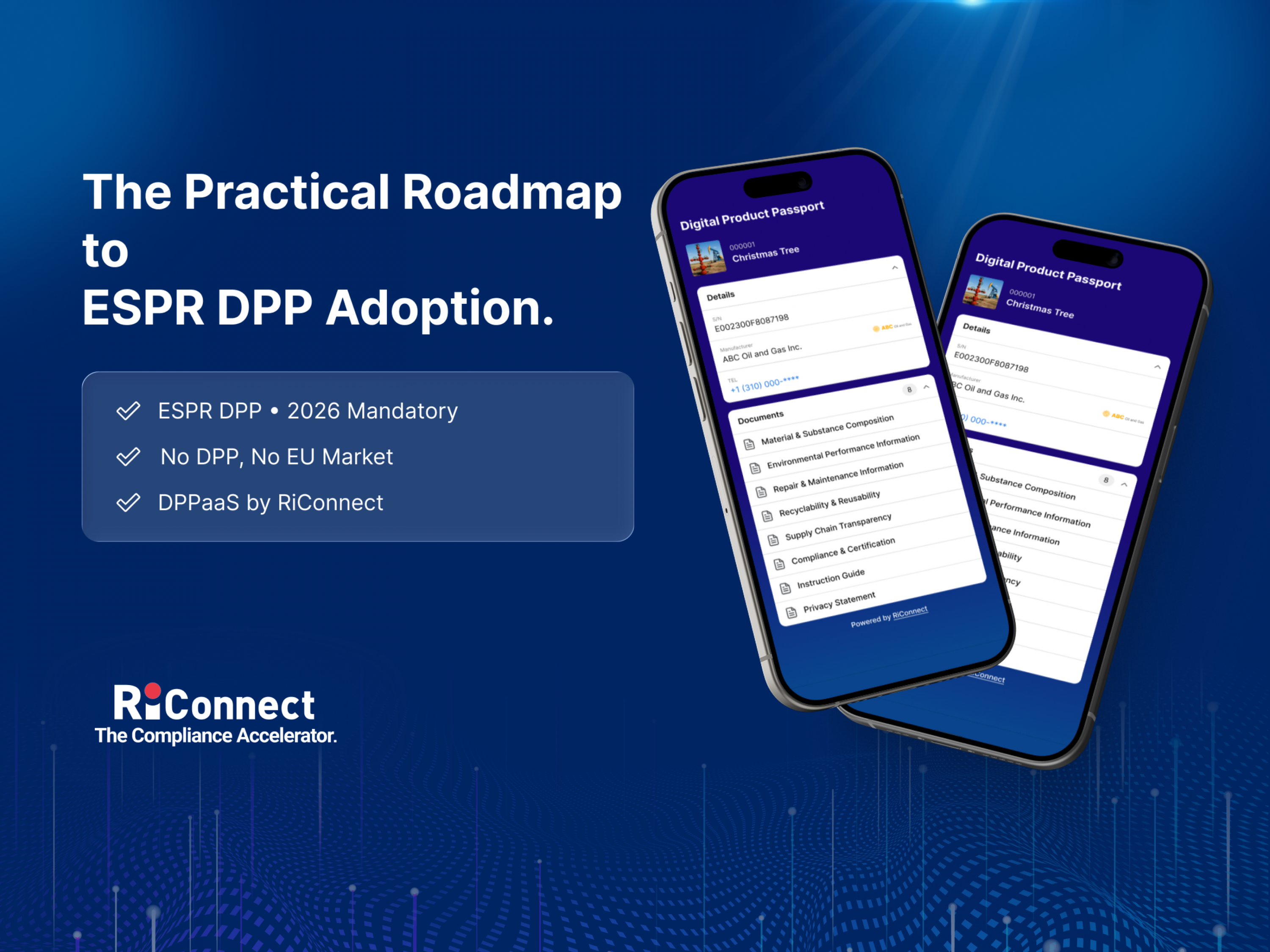
Recognizing the complexity and urgency of ESPR compliance, RiConnect developed Digital Product Passport as a Service (DPPaaS)—a comprehensive cloud-based platform that simplifies DPP implementation for organizations of all sizes.
RiConnect's approach addresses core manufacturer challenges. The platform provides ready-to-use infrastructure eliminating extensive internal IT development. Product information can be organized systematically using industry-standard templates that ensure regulatory compliance while remaining flexible for diverse product types.
The system supports multiple identification technologies including both RFID and QR codes, allowing manufacturers to choose approaches matching their operational requirements. Data security receives particular attention with configurable data residency, ensuring product information is stored in specific geographic regions to meet jurisdictional requirements.
Integration capabilities connect DPP systems with existing business platforms through Application Programming Interface (API) gateway technology. Each API Key is unique to a specific integration, typically issued per user, system, or organization, depending on the use case. This ensures that only authorized users or systems can access the API, with each key being traceable and individually manageable for security purposes.
Organizations can seamlessly link their Enterprise Resource Planning (ERP) systems, product lifecycle management tools, and quality management databases without complex custom development. This prevents data silos and eliminates duplicate data entry, making DPP management a natural workflow extension rather than additional administrative burden.
RiConnect provides ongoing support throughout implementation and beyond. As ESPR requirements evolve, the platform updates automatically, ensuring continuous compliance without manual system modifications. The DPPaaS model makes advanced compliance technology accessible to small and medium enterprises through subscription-based service delivery.
The 2026 ESPR deadline represents both challenge and opportunity. Organizations approaching DPP implementation purely as regulatory obligation miss significant value creation potential. DPPs enable operational improvements—better warranty management, efficient maintenance scheduling, enhanced customer service—that deliver returns beyond compliance.
RiConnect's DPPaaS solution bridges the gap between regulatory requirements and business value. By providing accessible, comprehensive platforms that handle technical complexity, RiConnect allows organizations to focus on strategic opportunities rather than infrastructure challenges.
As 2026 approaches, the question is no longer whether to implement these product passports but how quickly and effectively organizations can deploy compliant systems. RiConnect's experience and technology provide the foundation for successful implementation, transforming regulatory requirements into competitive advantages.


