 Back
Back
February 03, 2026
RiConnect
By RiConnect, Inc.
Share:


Industrial compliance management has undergone fundamental transformation over the past decade. What began as simple digitization—converting paper certificates to Portable Document Format (PDFs), moving spreadsheets to cloud storage—has evolved into comprehensive digital ecosystems where every inspection, certification, and compliance activity generates structured data. Regulatory frameworks increasingly mandate digital documentation, with the European Union's Ecodesign for Sustainable Products Regulation (ESPR) requirements for Digital Product Passports (DPPs) exemplifying how regulations are driving digital compliance infrastructure. However, digitization alone provides limited value. Storing compliance data digitally improves accessibility but fundamentally remains a documentation exercise. The true transformation occurs when organizations move beyond digital storage to data-driven decision-making—leveraging compliance data to predict risks, optimize operations, and prevent incidents before they occur.
Digitization is the technical process of converting information from an analogue or physical form into a digital one. Digitalization is the broader transformation of processes, workflows, and decision-making using digital technologies.
For Health, Safety & Environment (HSE) and compliance managers, this evolution represents a strategic shift. The question is no longer: "Can we access our compliance records digitally?" but rather: "What insights can our compliance data provide to improve safety outcomes and operational efficiency?"
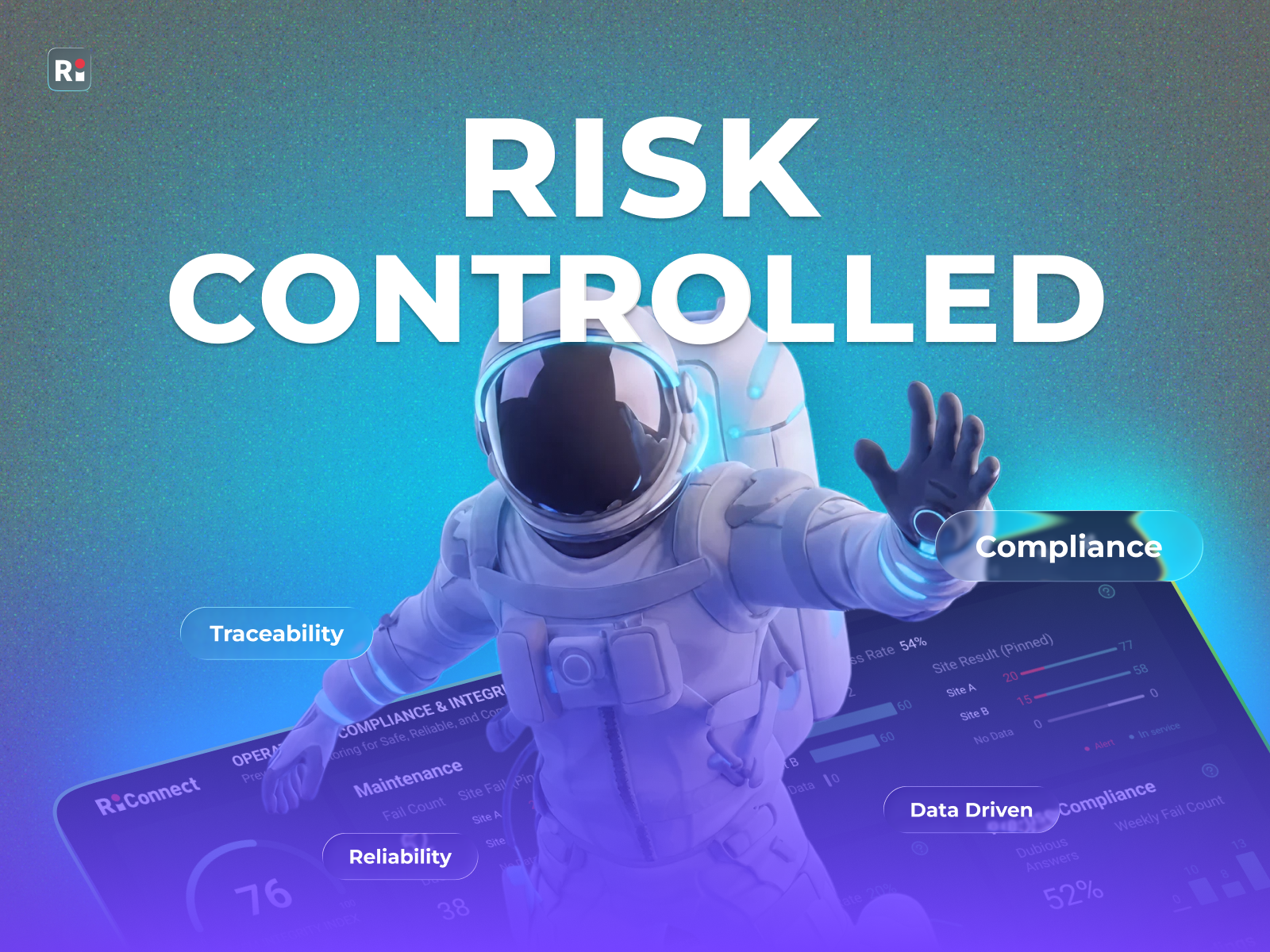
Data-driven compliance management transforms reactive responses into proactive risk management through pattern recognition and predictive analytics. Instead of fixed inspection schedules, regardless of actual equipment condition, data-driven approaches analyze historical performance, usage intensity, environmental conditions, and maintenance histories to identify equipment requiring attention before problems emerge. Anomaly detection flags deviations from established norms—declining inspection frequencies, delayed certification renewals, increasing incident rates—making visible within minutes what might take weeks to recognize through manual report review. Multi-site organizations particularly benefit, with performance comparisons revealing systemic issues and best practices, while enabling evidence-based resource allocation decisions.
Recognizing that compliance data holds untapped strategic value, RiConnect has released the Premium Dashboard—a comprehensive analytics dashboard that transforms compliance data into actionable intelligence for HSE managers and organizational leadership. The Premium Dashboard centers on an intelligent index system that continuously monitors compliance health across operations, aggregating multiple compliance indicators—certification currency, inspection completion rates, overdue actions, incident frequencies—into unified performance scores providing instant visibility into organizational compliance status. The system's intelligence extends beyond simple reporting. When a facility's compliance index drops unexpectedly; when inspection completion rates decline without explanation; when equipment certification renewals lag historical patterns, the Premium Dashboard generates automatic alerts directing management attention to emerging problems. These alerts transform compliance oversight from periodic report review to continuous monitoring, enabling managers to receive real-time notifications when patterns deviate from expected norms rather than waiting for monthly reports to discover compliance issues. The Premium Dashboard provides executive-level visibility designed for decision-makers requiring strategic oversight. Trend visualization shows whether compliance performance improves or declines over time. Predictive insights highlight areas where current patterns suggest future compliance risks. Customizable reporting enables different stakeholders to access relevant information—corporate directors view organization-wide compliance health, site managers focus on facility-specific performance, and operations leaders correlate compliance metrics with production efficiency.
The Premium Dashboard represents a significant milestone in RiConnect's evolution toward a comprehensive compliance-first platform. This positioning reflects our fundamental belief that compliance excellence forms the foundation of operational success, worker safety, and sustainable business performance. Compliance-first means that every system feature, every user interface decision, every data structure prioritizes compliance outcomes. Asset tracking exists to ensure compliance verification. Digital documentation serves compliance auditability. Mobile applications enable compliance execution in the field. Analytics drive compliance improvement. This approach differs from traditional asset management platforms that treat compliance as one feature among many. In compliance-first architecture, compliance requirements drive system capabilities rather than being accommodated within general-purpose tools.
For compliance managers and organizational leaders responsible for safety and regulatory standing, the evolution from basic digitization to data-driven compliance represents an opportunity to transform how organizations approach these critical responsibilities. The Premium Dashboard provides the intelligence infrastructure necessary to make this transformation practical and measurable. As regulatory requirements grow more complex and operational demands intensify, compliance-first platforms become essential infrastructure rather than optional technology. RiConnect continues developing capabilities that strengthen this positioning—deepening analytics, expanding integration with regulatory frameworks, and providing increasingly sophisticated intelligence for compliance decision-making. Organizations building their compliance management on data-driven foundations position themselves for sustained excellence in an increasingly demanding environment.


